Not sure where to start? Take the FREE Body Pattern Quiz and get your personalized guide. Take the Quiz →


.png)

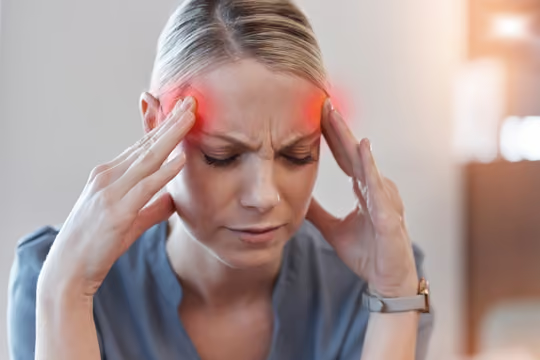
A deadline-heavy week can show up in your body before you fully recognize how stressed you are. Your shoulders stay raised at your desk. Your jaw feels tight. A familiar headache returns, or neck and back discomfort that had been manageable suddenly becomes harder to ignore.
These symptoms are not just “all in your head.”
Stress produces real physiological changes throughout the body. Understanding how stress affects your nervous system and causes physical pain starts with the body's built-in survival response. Stress activates the autonomic nervous system, changes breathing and heart rate, releases hormones such as adrenaline and cortisol, and prepares muscles for action. Muscle tension is an almost reflexive part of this response.
Short-term stress is normal and adaptive. When stress becomes frequent or prolonged, however, persistent muscle guarding, disrupted sleep, changes in movement and recovery, and altered pain processing can contribute to or intensify discomfort. But stress is one possible contributor to pain— not a catch-all explanation for every symptom.

Your stress response begins with the brain, which is part of the central nervous system along with the spinal cord. When your brain interprets something as threatening or demanding, it can activate automatic processes designed to help you respond quickly.
The autonomic nervous system regulates functions you generally do not have to consciously control, including heart rate, breathing, and aspects of digestion. The sympathetic nervous system is a part of this and signals the adrenal glands to release stress-response hormones, including adrenaline (epinephrine) and cortisol. Heart rate and breathing increase, energy becomes more readily available, and muscles prepare for action.
None of this means cortisol or sympathetic activity is inherently harmful. An acute stress response can help you react to genuine danger. After an immediate threat passes, parasympathetic nervous system activity helps dampen the stress response and move the body back to its usual state.
The problem is when demands are repeated or prolonged, and the body has fewer opportunities to recover.
There is no single pathway through which stress becomes pain. Instead, several physiological and behavioral processes can overlap— including disrupted sleep, reduced recovery, muscle guarding, stress-system activation, and changes in how the nervous system processes pain.
Muscle Guarding and Pain
When you are stressed, muscles naturally tense. This muscle guarding is useful when your body actually needs to protect itself or act quickly. But tension that continues long after an immediate danger has passed may become uncomfortable.
The neck, shoulders, jaw, and back are common areas to notice muscle tension from stress. Long hours at a computer can add another layer: you may already be staying in one position for extended periods, then unconsciously raise your shoulders, clench your jaw, or move less as work pressure increases.
The American Psychological Association (APA) notes that chronic stress can keep muscles tense for longer. This ongoing tension is associated with tension-type headaches and migraines, while stress, especially job stress, has also been linked to lower back and upper body pain.
Cortisol often gets blamed for the effects of chronic stress, but it is a normal and important part of the body's stress response. Cortisol helps make energy available when the body needs to respond to a perceived threat.
The issue is not cortisol itself. Rather, prolonged stress can mean repeated activation of the stress response, affecting multiple processes involved in health and recovery. The APA explains that chronic stress can gradually wear down the body by keeping its stress response active for too long. That distinction matters because persistent pain is rarely explained by a single hormone or mechanism.

Stress can also make it difficult to wind down and sleep well. Sleep problems are among the commonly recognized physical effects of stress.
The relationship becomes particularly important with pre-existing pain. Research suggests that sleep problems may increase the risk of developing or continuing to experience chronic musculoskeletal pain.
Pain can also disrupt sleep, creating a stress-pain feedback cycle: stress interferes with sleep, poor sleep can make pain harder to manage, pain itself becomes stressful, and can further disrupt sleep. Pain itself can also become a source of stress, contributing to worry, muscle guarding, reduced activity, or fear of worsening symptoms.
Chronic stress may contribute to greater pain sensitivity in some circumstances, but it would be too simplistic to say that stress always lowers everyone's pain threshold.
Your pain threshold is the point at which a sensation begins to feel painful. How much pain you feel does not always directly reflect the extent of an injury or physical problem. The brain and nervous system also play a role in how pain is experienced, integrating signals from your body, your surroundings, previous experiences, and other physical and psychological factors.
Sleep is one example. Research has found that not getting enough sleep can make the body more sensitive to pain and less able to naturally reduce pain signals. Some studies have also found that sleep deprivation can make pressure or heat feel painful sooner than it normally would. Stress, poor sleep, fear of pain, previous pain experiences, and ongoing symptoms may therefore interact rather than operate independently.
One concept sometimes relevant to persistent pain is central sensitization.
Central sensitization happens when the brain and spinal cord become more sensitive to pain signals. Pain may feel stronger, or sensations that normally wouldn’t hurt may become uncomfortable.
The International Association for the Study of Pain (IASP) defines central sensitization as increased responsiveness of pain-processing neurons within the central nervous system. It is not simply another term for stress.
Central sensitization should not be self-diagnosed based on pain intensity or stress levels alone. And importantly, greater pain sensitivity does not mean pain is imaginary. Pain remains a real experience even when the nervous system plays a role in how strongly you feel it.
Physical symptoms vary, and the same complaint may have many possible explanations. No symptom proves stress is the cause of your pain. Still, certain symptoms commonly accompany periods of stress.
These patterns can offer clues, but they are not a diagnostic test. New, persistent, unexplained, severe, or changing symptoms are not automatically stress-related.

The goal is not simply to “stress less,” nor is stress management a singular cure for pain. A better approach is to focus on what you can change and notice when your symptoms may need professional attention.
Relaxation and stress-relieving approaches may help reduce muscle tension and can support mood and daily function in people living with chronic pain. This process is sometimes called nervous system downregulation, or helping the autonomic nervous system shift away from a heightened stress response toward recovery.
For a busy schedule, small, consistent practices may be more realistic than an elaborate wellness routine.
These observations cannot diagnose the cause of pain, but they can provide useful information to discuss with a healthcare professional if symptoms persist or keep returning.
When recurring discomfort has several possible contributors, individualized, whole-person care may consider nervous system regulation alongside movement patterns, muscular tension, posture, recovery, and everyday habits. If you’d like to better understand what may be contributing to your symptoms, Grace Integrative Wellness Center offers an approach to central nervous system regulation and pain management that may include chiropractic care, corrective bodywork, movement assessment, and nervous-system-focused techniques.
“It's stress” is not a diagnosis. Stress can contribute to discomfort or amplify existing symptoms without necessarily being their sole cause.
You may want to see a healthcare professional if your pain keeps coming back, gets worse, or starts affecting your sleep, work, exercise, or daily activities. It may also be worth getting checked if you’re unsure what’s causing the pain or if things you’ve tried at home aren’t helping.
Individualized evaluation can look beyond the painful area alone. Depending on the situation, a healthcare professional may consider movement, muscle tension, daily habits, stress levels, sleep, and recovery, along with other potential contributors.
Stress can produce genuine physical changes involving the nervous system, stress hormones, muscles, sleep, and pain processing. Recognizing those connections can help you spot patterns and support recovery, but persistent pain shouldn’t be dismissed and deserves appropriate attention.
If your discomfort repeatedly worsens during stressful periods, interferes with normal activities, or is not improving with reasonable self-care, you can contact our South Pasadena wellness clinic to discuss your symptoms and determine whether individualized care may be appropriate.

Maria Antiga is a full-time content strategist and writer for E-Marketing Associates, covering a wide range of subjects with a thoughtful approach to each topic. Her work combines careful research with clear, engaging writing, with a focus on addressing readers’ questions with clarity and useful context.



.avif)
507 Mission St,
South Pasadena, CA 91030
*Inside Mission Chiroworks