Not sure where to start? Take the FREE Body Pattern Quiz and get your personalized guide. Take the Quiz →
Pain can affect much more than the part of your body that hurts. How you move, your posture, muscle tension, stress, previous injuries, daily habits, and nervous system function may all contribute to how you feel.
At Grace Integrative Wellness Center in South Pasadena, Dr. Kristine Troesch, DC, CMT, provides personalized Integrative Chiropractic Care designed to look beyond symptoms and identify factors that may be contributing to pain, tension, limited mobility, or recurring discomfort.
Rather than focusing on chiropractic adjustments alone, care may combine chiropractic treatment with corrective bodywork, movement assessment, nervous system regulation, and other complementary therapies based on your individual needs.
The goal is simple: help you better understand your body, improve how you move and function, and create a personalized path toward long-term wellness.
Integrative Chiropractic Care combines chiropractic treatment with complementary therapies and patient education to address the individual factors contributing to pain, movement limitations, and dysfunction.
A chiropractic adjustment is one tool that may be used to improve joint function and mobility. At Grace Integrative Wellness, it is considered part of a broader treatment approach rather than the entire treatment.
Your care may also include corrective bodywork, movement assessment, postural guidance, rehabilitation exercises, breathing techniques, and cupping or decompression therapy, when appropriate.
Because every person's body, health history, lifestyle, and goals are different, treatment is personalized to you.
Grace Integrative Wellness was built around a different kind of patient experience: personalized, one-on-one care with time to understand what may be contributing to your symptoms.

Your treatment is guided by Dr. Kristine Troesch and may combine chiropractic care with complementary techniques based on your individual needs.
Dr. Kristine's background in chiropractic care and corrective bodywork allows her to consider joint mobility, muscular tension, posture, movement patterns, and nervous system regulation as part of one coordinated approach.
There is no one-size-fits-all treatment plan. Recommendations are based on your health history, examination, symptoms, movement patterns, and personal goals.
Where you feel pain isn't always the only area that deserves attention. Grace's root-cause philosophy looks for underlying factors that may be contributing to your symptoms, rather than focusing only on where it hurts.

Longer appointments provide time for evaluation, hands-on care, patient education, and treatment that can adapt as your needs change.
The goal is not simply to address a symptom in isolation. Treatment considers how your joints, muscles, movement patterns, nervous system, daily activities, and overall health may interact.
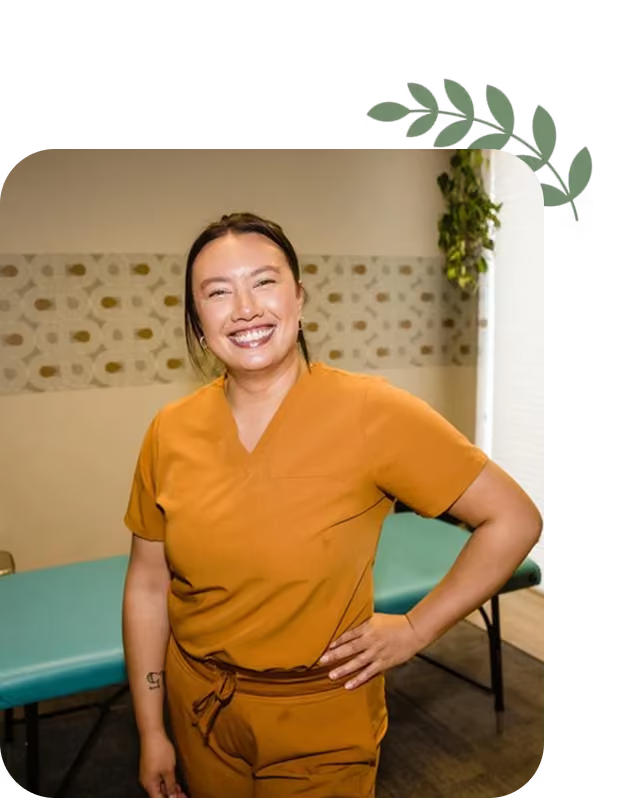
Dr. Kristine Troesch leads Grace Integrative Wellness Center with an emphasis on personalized, evidence-informed care.
Her approach brings together chiropractic care and corrective bodywork to evaluate how joint mechanics, muscular tension, posture, movement, and nervous system function may be contributing to the way you feel.
That broader perspective allows treatment to be tailored to the individual rather than centered around a single technique.
Patient education is also an important part of care. Understanding what may be contributing to your symptoms can help you make more informed decisions about movement, recovery, and long-term wellness.
No two treatment plans are exactly alike. Depending on your evaluation, health history, symptoms, and goals, your care may incorporate one or more of the following:
Manual techniques used to support joint function and mobility. Adjustments may be incorporated as one part of your overall treatment plan.
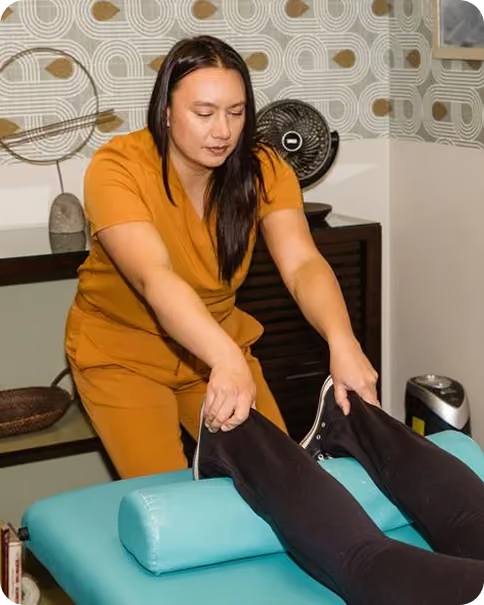
Hands-on techniques designed to address muscular restrictions, support movement, reduce tension, and promote recovery.
Evaluating how your body moves can help identify mobility limitations, compensation patterns, and other factors that may be contributing to discomfort.
Movement, breathing techniques, manual therapies, and chiropractic treatment may be used to support healthy nervous system function and help address patterns associated with chronic tension and stress.
Personalized movement and exercise recommendations may be incorporated to support mobility, stability, and long-term function.
Cupping uses gentle suction as a complementary soft-tissue technique that may be incorporated when appropriate to address muscle tension and mobility.
Instrument-Assisted Soft Tissue Mobilization (IASTM), sometimes called Gua Sha, uses specialized tools to apply controlled pressure to muscles and connective tissues, helping address restrictions and support mobility and function.
Decompression therapy may be used when appropriate to help reduce pressure on spinal structures, support mobility, and complement your overall treatment plan based on your individual needs.
For patients who may benefit from a more comprehensive approach, Grace Integrative Wellness offers a 60-minute Integrated Alignment Session.
Rather than relying on one treatment technique, the session may combine:
The additional time allows Dr. Kristine to address multiple factors that may be influencing your movement, tension, and discomfort during a single coordinated appointment.
Integrated Alignment Session
60 Minutes | $250
Discounted rates are available through membership options.

People seek chiropractic care for many different reasons. Some are experiencing persistent discomfort, while others want to improve mobility, address recurring tension, or better understand why certain symptoms keep returning.
Depending on your individual circumstances, Grace Integrative Wellness may provide care for concerns including:
Chiropractic care does not treat or cure autoimmune disease or other underlying medical conditions. For individuals living with complex or chronic health conditions, care focuses on musculoskeletal symptoms, mobility, function, and individualized treatment goals, when appropriate.

Women's bodies can experience changing physical demands throughout different stages of life.
Pregnancy, postpartum recovery, hormonal and life-stage changes, work demands, caregiving, exercise, stress, and previous injuries can all influence how your body moves and feels.
Women's Health is an important focus at Grace Integrative Wellness. Dr. Kristine frequently works with women who have been struggling to find care that addresses their concerns and takes their experiences seriously. One of the most meaningful and consistent comments she hears from patients is, "Thank you for believing me."
That experience reflects an important part of Dr. Kristine's approach: listening carefully, taking the time to understand each patient's experience, and recognizing that every woman's health history, symptoms, and goals are different.
When appropriate, Integrative Chiropractic Care may be incorporated into a personalized approach designed to support mobility, address musculoskeletal discomfort, reduce physical tension, and help you feel more confident in how your body moves.


Your nervous system plays an important role in how your body responds to movement, stress, and your environment.
When stress becomes persistent, some people notice increased muscle tension, changes in breathing, difficulty relaxing, or physical discomfort. This doesn't mean that every symptom is caused by stress, but it does mean that nervous system function can be an important part of the overall picture.
At Grace Integrative Wellness, Nervous System Regulation may incorporate breathing techniques, movement, manual therapies, and chiropractic treatment to support healthy nervous system function.
This is part of Grace's whole-person approach: looking at how different factors may be interacting rather than treating one symptom in isolation.
60 Minutes | $175
30 Minutes | $100
60 Minutes | $250 (Integrated Alignment Session)
Discounted rates are available through membership options.
Because every patient is different, the number and frequency of appointments will vary. Dr. Kristine will discuss recommendations based on your individual circumstances rather than applying the same schedule to everyone.



.avif)
507 Mission St,
South Pasadena, CA 91030
*Inside Mission Chiroworks