
Not sure where to start? Take the FREE Body Pattern Quiz and get your personalized guide. Take the Quiz →


.png)

Recurring headaches can interfere with almost everything: concentrating at work, sleeping well, exercising, spending time with family, or simply getting through the day comfortably. If you regularly reach for medication to manage the symptoms, you may eventually wonder whether something is being overlooked.
That often raises the question: Can chiropractic help with chronic headaches naturally?
For some people, it may. Chiropractic care can be a reasonable conservative option to explore when restricted movement, muscle tension, neck joint dysfunction, or other musculoskeletal factors appear to be linked to recurring headaches. However, the type of headache also matters because it depends on its cause.
That is why appropriate headache care should begin with an evaluation rather than the assumption that every headache needs the same treatment.
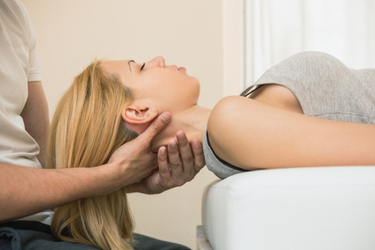
“Chronic headaches” refers to a recurring problem, not a single diagnosis or cause. Different types of headaches can have different underlying factors.
A systematic review found small, short-term improvements in cervicogenic headache pain and frequency with spinal manipulation compared with other manual therapies (Fernandez et al., 2020). For tension-type headaches, research on spinal manipulation remains inconclusive, but other hands-on approaches may also have a role. A 2024 systematic review and meta-analysis found that myofascial release may help reduce pain and disability associated with tension-type and cervicogenic headaches. Research on migraine showed some potential benefits as well, although the evidence was less consistent and generally of lower quality.
Three points are especially important:
Spinal Manipulation for Headaches
Spinal manipulation is a hands-on technique that applies a controlled movement or force to a spinal joint. In headache care, it is one potential intervention, not a complete treatment plan by itself.
For appropriately selected patients, care may involve the entire cervical spine, as well as the upper shoulders and surrounding muscles and soft tissues. The specific areas treated and techniques used should be based on the headache type, examination findings, health history, and individual risk considerations.
Similar head pain does not necessarily mean two people have the same headache disorder. Identifying the pattern helps determine whether chiropractic care, another conservative approach, or medical management is more appropriate.
A cervicogenic headache is a secondary headache associated with a disorder or problem involving the cervical spine or soft tissues of the neck. Neck pain commonly accompanies it, although it is not always present.
Clues can include pain that worsens with neck movement, pain that radiates from the back toward the front of the head, or a familiar headache that appears when certain areas of the neck are pressed. But these features alone do not prove that the neck is causing the headache, which is why assessment matters.
Of the headache patterns discussed here, cervicogenic headache has comparatively more supportive evidence for spinal manipulation. For this reason, chiropractic care for cervicogenic headache may include assessing cervical joint function and movement when the clinical picture suggests neck involvement.
Tension-type headaches are commonly described as pressing or tightening rather than pulsating. They are often felt on both sides of the head, tend to be mild to moderate, and generally are not worsened by ordinary physical activity.
Some people also notice tightness in the neck, upper shoulders, scalp, or muscles near the base of the skull. Stress, prolonged desk work, and muscular tension may coexist with these symptoms.
If you are looking for natural relief from tension headaches, a combined approach may be worth considering rather than focusing on spinal manipulation alone. Research on spinal manipulation for tension-type headaches remains inconclusive, while studies of myofascial release and other hands-on therapies suggest potential benefits for pain and disability. Depending on the individual, care may therefore combine chiropractic treatment with bodywork and consider muscular tension, movement patterns, workplace habits, stress, and other contributing factors.

Migraine is a neurological headache disorder, not simply a headache caused by a tight neck. Neck pain or muscle tension can occur alongside migraine, but their presence does not necessarily mean that they are the cause.
A typical migraine can cause moderate to severe throbbing pain, sensitivity to light and sound, nausea, and pain that gets worse with normal activity.
Current evidence does not establish chiropractic adjustments alone as an effective treatment for migraine. However, a broader, individualized approach may incorporate soft-tissue work, rehabilitation exercises, and other appropriate therapies to address associated muscle tension, joint discomfort, and other musculoskeletal symptoms. For patients with migraine, this type of supportive care can be provided alongside appropriate management by a primary care provider or other healthcare professional.
After hours at a computer with little movement, your shoulders may tighten, your neck may stiffen, and a familiar headache may begin. This does not prove that your neck caused the headache, but it can give a clinician useful information to investigate.
Research in office workers has linked limited task variation and perceived muscular tension with the development of neck pain. Poor desk ergonomics and prolonged static posture may contribute to ongoing neck discomfort, restricted movement or irritation around the cervical joints, and tension in the neck and upper shoulders. Stress can add to this by causing muscles to tighten or guard.
Persistent neck tension may contribute to certain headache patterns and increase overall physical stress. Headaches may also lead you to tense your neck or move less, potentially reinforcing the discomfort. Workstation habits and prolonged sitting are discussed further in Desk Job Neck Pain: Causes and Relief.
The suboccipital muscles are small muscles at the base of the skull that help control head and neck movement.
Suboccipital tension can develop when this area becomes tight or uncomfortable with prolonged positioning or muscle guarding. When this tension occurs alongside recurring headaches, it may be one factor worth assessing.
Headache care should begin with understanding your symptoms rather than automatically performing an adjustment.
An individualized evaluation may consider your headache history and pattern, neck mobility, muscular tension, posture, workplace habits, movement limitations, and stress-related physical tension. The assessment can also help determine when symptoms warrant medical attention or input from another healthcare provider.
At Grace Integrative Wellness Center, Dr. Kristine Troesch brings a women's health focus to a comprehensive approach that goes beyond adjustments alone. Depending on clinical findings, the practice may incorporate chiropractic treatment alongside approaches such as corrective bodywork, rehabilitation exercises, nervous system regulation strategies, patient education, and ergonomic or movement recommendations.
That broader approach allows care to focus on the factors identified during an individual evaluation. You can learn more about Grace's approach to chiropractic treatment for chronic headaches and migraines.
No single symptom can tell you whether chiropractic care will improve your headaches. Certain patterns can, however, make an evaluation reasonable.
☐ Headaches frequently occur alongside neck pain or stiffness.
☐ Symptoms often appear after prolonged computer or screen work.
☐ Your headache pattern seems influenced by neck position or movement.
☐ Tightness regularly develops through your upper shoulders or at the base of your skull.
☐ Headaches frequently occur alongside chronic neck tension or other musculoskeletal discomfort.
☐ Previous strategies have focused on the headache itself without assessing associated neck dysfunction.
These are not diagnostic criteria. Even cervicogenic headaches cannot be identified simply by the fact that your neck hurts when your head hurts. The International Classification of Headache Disorders notes that characteristics such as pain triggered by neck movement can suggest cervicogenic headache, but are not unique to it.
The goal of an evaluation is to determine whether musculoskeletal factors contribute to your headaches and whether conservative care may be appropriate as part of your overall management plan.
New, severe, unusual, or rapidly changing headaches should not automatically be treated as a muscle or spinal problem. Headache red flags are important because some secondary headaches require prompt medical assessment.
Seek appropriate medical evaluation for concerning symptoms such as:
Recognized headache-screening frameworks include sudden onset, neurological deficits, systemic symptoms, pattern change, and other clinical warning signs among factors that can warrant further investigation.
When symptoms are concerning or the diagnosis is uncertain, medical evaluation should take priority over assuming the headache is musculoskeletal.

Treatment recommendations can be tailored to what is actually found. Grace's longer, one-on-one appointments allow time for individualized evaluation, treatment, and reassessment.
Depending on your evaluation, care may include treatment, practical self-care or movement strategies, ongoing reassessment, and coordination with another healthcare provider when appropriate.
Personalized headache care should not begin with the assumption that everyone needs the same treatment, visit frequency, or adjustment schedule. There is no set number of visits that can guarantee headache relief. How you respond to care depends on factors such as your headache type, health history, examination findings, individual contributing factors, and goals.
Tight or tender neck muscles can be associated with some types of headaches, but they do not necessarily mean the neck is the cause.
Headaches that occur with neck pain, limited movement, or symptoms affected by neck position may have a neck-related component, but an evaluation is needed to determine the cause.
Not necessarily. Grace's integrative model may combine adjustments with corrective bodywork, rehabilitation, movement guidance, nervous system regulation strategies, and other supportive approaches when clinically appropriate.
There is no set number. The recommended amount of care depends on your headache pattern, evaluation findings, response to treatment, and individual needs.
Recurring headaches should not automatically be assumed to have one cause. If neck dysfunction, limited movement, chronic muscle tension, or other musculoskeletal factors accompany your symptoms, a chiropractic evaluation may be a conservative option worth exploring alongside appropriate medical care.
Grace Integrative Wellness Center's approach is designed around individualized, whole-person assessment rather than promising that an adjustment will eliminate every headache. If you are considering longer-term integrative care and want to understand the financial side as well, you can review pricing for ongoing headache care. This can help you assess available options and decide what may fit your individual needs and goals.

Maria Antiga is a full-time content strategist and writer for E-Marketing Associates, covering a wide range of subjects with a thoughtful approach to each topic. Her work combines careful research with clear, engaging writing, with a focus on addressing readers’ questions with clarity and useful context.



.avif)
507 Mission St,
South Pasadena, CA 91030
*Inside Mission Chiroworks